Middletown
(845) 957-8453


Dental Implants vs. Bridges vs. Dentures: Which Is Right for You?
Losing a tooth changes more than your smile. It affects how you chew, speak, and feel about yourself. Today, patients have more tooth replacement options than ever before. Understanding those options — especially Dental Implants — helps you make a confident, informed decision.
At SmileCross Dental of Middletown, our dental team believes education leads to better outcomes. This guide compares three popular tooth replacement approaches. We want you to understand the differences before you sit in the chair.
What Are Dental Implants?
A dental implant is a small titanium post. It is surgically placed into your jawbone, where it acts as an artificial tooth root. Over a few months, the post fuses with the bone in a process called osseointegration. A crown is then attached on top to complete the restoration.
Implants are considered the closest modern dentistry gets to a natural tooth. They are stable, durable, and do not rely on neighboring teeth for support. Many patients choose them for their long-term value and natural appearance.
Because implants stimulate the jawbone, they also help prevent the bone loss that often follows tooth extraction. This matters significantly for your facial structure over time. No other tooth replacement option does this as effectively.
Dental Implants vs. Dental Bridges
A dental bridge fills a gap by anchoring an artificial tooth to the teeth on either side. Those anchor teeth must be filed down to support the bridge. This is a permanent change to otherwise healthy teeth.
Pros and Cons of Dental Implants:
- Look and function like natural teeth
- Preserve jawbone and prevent bone loss
- Do not affect neighboring teeth
- Can last a lifetime with proper care
- Require a surgical procedure and healing time
- Initial treatment takes several months to complete
Pros and Cons of Dental Bridges:
- Faster treatment timeline than implants
- No surgery required
- Effective and reliable tooth replacement
- Require reshaping healthy neighboring teeth
- Do not prevent jawbone loss beneath the gap
- May need replacement after 10–15 years
Bridges work well when neighboring teeth already need crowns. However, if those teeth are healthy, altering them for a bridge is a significant trade-off. Your dentist will evaluate your specific situation carefully.
For many patients who want a long-lasting, independent restoration, Dental Implants offer clear advantages over bridges. Still, bridges remain a valid and widely used option for the right candidate.
Dental Implants vs. Dentures
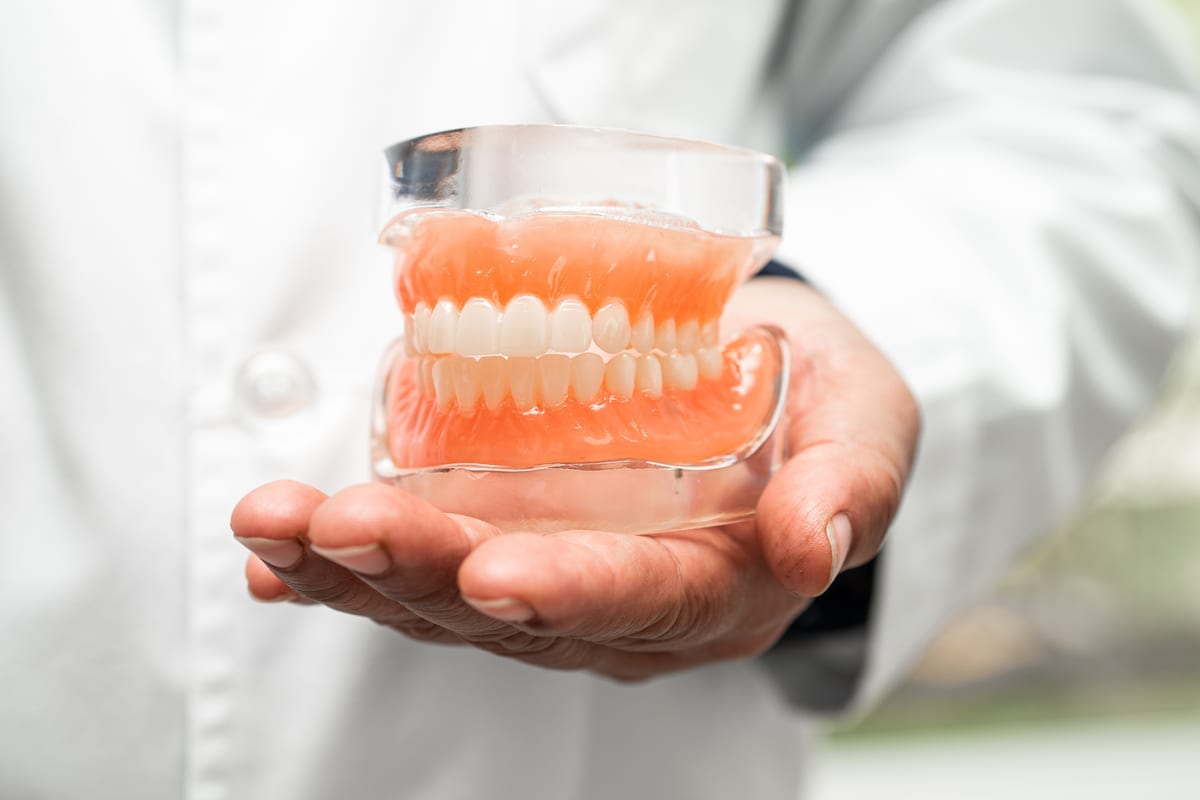
Dentures are removable appliances that replace multiple missing teeth. Full dentures replace an entire arch. Partial dentures fill in gaps when some natural teeth remain.
Pros and Cons of Dentures:
- Non-surgical solution for tooth loss
- Can replace many teeth at once
- More affordable upfront than implants
- May feel less stable during eating and speaking
- Can slip or shift without adhesive
- Do not prevent jawbone shrinkage over time
- Require regular adjustments as the jaw changes shape
Implant-supported dentures offer a middle ground. They use a small number of implants to anchor a full arch of teeth securely. This option combines the bone-preserving benefits of implants with the efficiency of dentures.
Traditional dentures often require ongoing adjustments as the jawbone shrinks. Implants eliminate that problem entirely. For active patients — especially those preparing for a busy late spring and summer season — stability matters a great deal.
How Do Patients Decide Between These Options?
Choosing a tooth replacement is a personal decision. It depends on your health, bone density, budget priorities, and lifestyle. Our dental team at SmileCross Dental of Middletown takes time to review all of these factors with you.
Here are key questions to consider when deciding:
- How many teeth are missing or need replacement?
- Is your jawbone healthy enough to support an implant?
- Do you prefer a permanent or removable solution?
- How important is long-term durability to you?
- Are your neighboring teeth healthy and intact?
Patients with a single missing tooth and good bone density are often ideal implant candidates. Patients replacing a full arch may weigh implant-supported dentures more carefully. There is no single right answer — only the answer that fits your life.
This time of year, many families are busy with graduations, proms, and end-of-school activities. It is also a popular time for adults to finally address dental concerns they have delayed. Scheduling a consultation now means you can plan your treatment around the summer calendar without rushing.
We encourage patients to learn more about our dental team and our approach to patient-centered care before their first visit. Feeling comfortable with your provider makes every step of treatment easier.
Starting Your Tooth Replacement Journey at SmileCross Dental
Whether you are considering Dental Implants, a bridge, or dentures, the first step is a thorough evaluation. Our dental team will take X-rays and assess your bone health. We will also walk through all available options with you clearly and honestly.
We serve patients at SmileCross Dental of Middletown with a range of restorative and cosmetic services. You can explore our full list of dental services to see how we can support your complete oral health. From single-tooth implants to full-arch restorations, we are here to guide you.
No matter which option you choose, acting sooner protects your jawbone and overall oral health. Delaying treatment allows bone loss to progress. Early action gives you more choices and better long-term outcomes.
Our goal is always to help you understand your options without pressure. An informed patient makes a decision they feel good about for years to come. Learn More about how we can help you.
Frequently Asked Questions
How long do Dental Implants typically last?
With proper oral hygiene and regular dental checkups, dental implants can last a lifetime. The crown on top may need replacement after 15–25 years due to normal wear. The implant post itself, once fully integrated, is designed to be a permanent fixture in the jaw.
Are Dental Implants painful to get?
The procedure is performed under local anesthesia, so patients feel little to no pain during placement. Some soreness and swelling are normal in the days following surgery. Most patients manage post-procedure discomfort with over-the-counter pain relief and find it manageable.
Can anyone get Dental Implants?
Most healthy adults are candidates for dental implants. However, sufficient jawbone density is essential to support the implant post. Patients with bone loss may need a bone graft before implant placement. Your dentist will evaluate your eligibility during a thorough consultation.
How do bridges compare to implants in terms of longevity?
Dental bridges typically last 10–15 years before they may need replacement. Dental implants, by contrast, can last decades or even a lifetime with proper care. Over the long term, implants often prove to be the more durable and cost-effective investment for many patients.
What is the recovery time for a Dental Implant procedure?
Initial healing from implant surgery typically takes one to two weeks for soft tissue. Full osseointegration — the process where the implant fuses with the jawbone — takes three to six months. During this healing period, a temporary crown is often placed so you are never without a tooth in the gap.